
Studying abroad from Nepal is a major investment that requires careful planning, especially when it comes to managing your budget and understanding the visa process. For students planning to study abroad from Nepal in 2026, having the right guidance can make a significant difference. With expert support from Crown Bridge International Educational Consultancy, students can confidently navigate university selection, financial preparation, and visa requirements. As the process becomes more competitive and detail-driven, making informed decisions at every step is more important than ever.
From selecting the right country and estimating total costs to preparing strong financial documents for visa approval, each stage plays a critical role in your success. Without proper planning, many students face delays, rejections, or unexpected expenses.
Which Countries Are Best for Nepali Students in 2026?
Based on 2026 visa trends and economic shifts, here is the data-driven outlook for the most popular destinations.
| Destination | 2026 Success Trend | Financial Requirement (NPR) | Best For |
| Australia | Targeted Scrutiny | 55 – 65 Lakhs | High-ROI Work Opportunities |
| Canada | Policy-Driven | 45 – 70 Lakhs | Long-term PR Pathways |
| UK | High Efficiency | 35 – 50 Lakhs | Rapid Degree Completion |
| USA | Interview-Heavy | 40 – 75 Lakhs | Research & Innovation |
| Europe | Growing Interest | 15 – 30 Lakhs | Low Tuition/High Quality |
How to Choose the Right Study Destination from Nepal in 2026?

Before selecting a destination, it is important to evaluate key factors that directly impact your study experience and future opportunities. Making the right decision depends on understanding both short-term costs and long-term outcomes.
- Total Cost of Attendance (TCoA): Includes tuition fees and living expenses, which may vary in 2026 due to inflation.
- Visa Approval Chances: Depends on documentation, financial strength, and the current visa trends for Nepali students.
- Work Rights: Some countries allow part-time work (for example, up to 24 hours per week in Australia), which can help manage expenses.
- Post-Study Opportunities: Consider job prospects, post-study work visas, and career growth after graduation.
What Is the Step-by-Step Admission Process for International Universities?

Understanding the admission process step by step helps Nepali students avoid mistakes and improve their chances of acceptance and visa approval. While the process may vary slightly by country, the overall structure remains similar.
At Crown Bridge International Educational Consultancy, students are guided through each stage to ensure their application is accurate, complete, and ready for decision-making.
Step 1: Research and Profile Evaluation
Choose suitable courses and universities based on your academic background, GPA, and test scores for the 2026 intake.
Step 2: Document Preparation
Prepare all required documents, including transcripts, a well-structured SOP, and recommendation letters.
Step 3: Application Submission
Submit applications through official university portals or authorized channels to avoid errors.
Step 4: Offer Letter Review
Understand the difference between conditional and unconditional offers before accepting.
Step 5: Tuition Fee Payment
Pay the required deposit through secure banking channels to confirm your admission.
Step 6: Student Visa Application
Submit financial documents, biometrics, and required evidence to the respective embassy or high commission.
Step 7: Pre-Departure Preparation
Attend pre-departure sessions, arrange accommodation, and understand health insurance and travel requirements.
How Much Does It Really Cost to Study Overseas from Nepal?
The total cost of studying abroad from Nepal depends on your chosen country, course, and lifestyle. In 2026, fluctuations in the Nepalese Rupee (NPR) exchange rate also play a major role in increasing or decreasing your overall expenses. Understanding both tuition fees and living costs is essential before making a decision.
Tuition Fees by Country (Estimated Per Year)
- Australia: NPR 20–35 Lakhs
- Canada: NPR 15–30 Lakhs
- UK: NPR 18–35 Lakhs
- USA: NPR 25–45 Lakhs
- Europe: NPR 2–18 Lakhs
Living Expenses (2026 Government Benchmarks)
- Australia: Around NPR 28 Lakhs (Proof required: AUD 29,710)
- Canada: Around NPR 22 Lakhs (GIC requirement)
- UK/USA: NPR 18–25 Lakhs
What This Means for Nepali Students
- You should plan for total annual costs, not just tuition fees
- Financial proof is mandatory for visa approval
- Exchange rate changes can increase your actual expenses
- Choosing the right country depends on both budget and long-term return
Additional Expenses You Should Not Ignore
Apart from tuition fees and living costs, Nepali students must also plan for several additional expenses that are often overlooked during the initial budgeting phase. These costs can significantly impact your total study abroad budget.
- PTE/IELTS Exams: NPR 33,000 – 38,000
- Student Visa Fees: NPR 60,000 – 1.2 Lakh (varies by country)
- Health Insurance: NPR 60,000 – 1.5 Lakh per year
- Flight & Airfare: NPR 80,000 – 2.5 Lakh (seasonal variation)
How to Plan Your Budget Smartly

Planning your budget properly is one of the most important steps when preparing to study abroad. A well-managed financial plan not only increases your chances of visa approval but also helps you avoid unexpected expenses during your stay.
- Maintain Financial History: Keep the required bank balance for at least 6 months before applying, as most countries check financial consistency.
- Add a Forex Buffer: Always include an extra 10% in your budget to manage fluctuations in the Nepalese Rupee (NPR) exchange rate.
- Explore Scholarships and Grants: Many universities offer scholarships that can reduce tuition fees by 15% to 50%, depending on your academic profile.
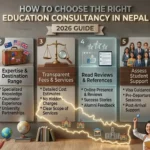
How to Choose the Right Education Consultancy in Nepal?
Choosing the right education consultancy can make a big difference in your study abroad journey. A reliable consultancy not only helps with university applications but also guides you through documentation, visa processing, and pre-departure preparation.
When evaluating your options, consider the following:
- Check Verified Success: Ask for recent visa approvals or success cases from 2026 to understand their track record.
- Look for Transparency: Make sure they clearly explain service charges, university fees, and any additional costs, with no hidden information.
- Evaluate Support Services: A good consultancy should provide complete guidance—from test preparation and application support to visa processing and post-arrival assistance.
Final Thoughts
The study abroad landscape in 2026 is more competitive than ever, especially for Nepali students. By focusing on accurate financial planning, understanding the admission process, and preparing strong documentation, you can avoid common mistakes that often lead to delays or visa rejections.
Choosing the right country, managing your total cost, and working with reliable guidance can make the entire journey smoother and more successful. The key is to start early, stay informed, and make decisions based on proper research rather than assumptions.
With the right approach, studying abroad from Nepal can become a life-changing opportunity that opens doors to global education and career growth.