
USA student visa rejection happens when your F1 visa application is refused under Section 214(b) of U.S. immigration law. For many Nepali students, this usually occurs during the interview stage, where clarity, confidence, and genuine intent matter more than just documents. Understanding the process early through proper guidance from platforms like Crown Bridge International Education Consultancy can significantly improve your chances of approval.
According to the U.S. Department of State, most refusals happen when applicants fail to clearly present their study plan, financial background, or future intentions.
What Does USA Student Visa Rejection Actually Mean?
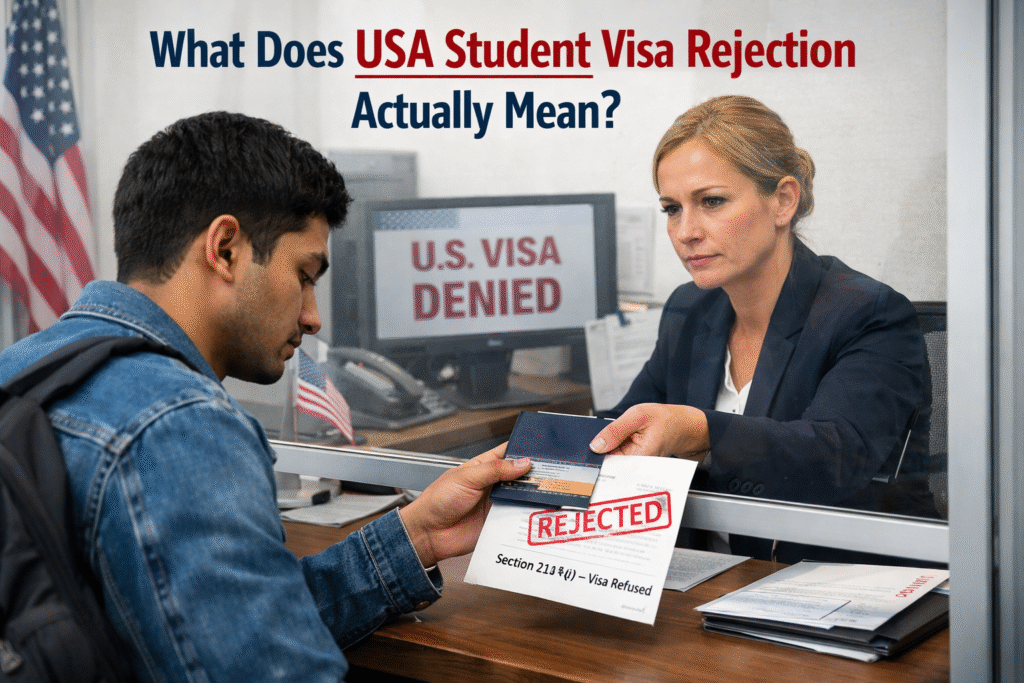
A visa rejection under 214(b) does not mean your documents are incorrect or your profile is weak. It simply means the visa officer was not fully convinced during your interview.
In practical terms, the officer is evaluating whether:
- You are a genuine student
- Your education plan makes sense
- You have the financial ability to study
- You intend to return to Nepal after completing your studies
If any of these areas feel unclear, inconsistent, or unconvincing, your visa can be refused immediately.
Understanding 214(b): How Visa Officers Think
Under U.S. immigration law, every applicant is considered a potential immigrant by default. Your responsibility is to prove otherwise.
Here’s how officers typically evaluate your case:
- Your answers matter more than your documents
- They look for logical and consistent explanations
- They assess your confidence and communication
- They judge your overall credibility in a short time
A 214(b) refusal is a direct decision made during the interview. It is not a delay or pending review it means the officer was not satisfied at that moment.
F1 Visa Refusal Data (Latest Official Statistics)
| Year | Applications | Issued | Refused | Refusal Rate |
| FY 2023 | 698,773 | 445,418 | 253,355 | 36.3% |
| FY 2024 | 679,290 | 400,737 | 278,553 | 41.0% |
What This Data Shows
- Visa rejection is common worldwide, not just in Nepal
- Nearly 1 out of 3 to 2 out of 5 students face refusal
- Competition and scrutiny have increased in recent years
This data is based on official U.S. Department of State statistics, making it reliable for understanding current visa trends.
Top USA Student Visa Rejection Reasons for Nepali Students (2026)
Most rejections are not because of documents but because of how your case is presented.
Key Reasons
1. Unclear Study Plan
You cannot clearly explain why you chose your course, university, or country.
2. Weak Financial Clarity
Your funding source is unclear, inconsistent, or not believable.
3. Poor Interview Communication
You appear nervous, over-rehearsed, or unable to explain your answers naturally.
4. Lack of Strong Home Ties
You fail to show clear reasons to return to Nepal after your studies.
5. Inconsistent Information
Your DS-160, documents, and answers do not match properly.
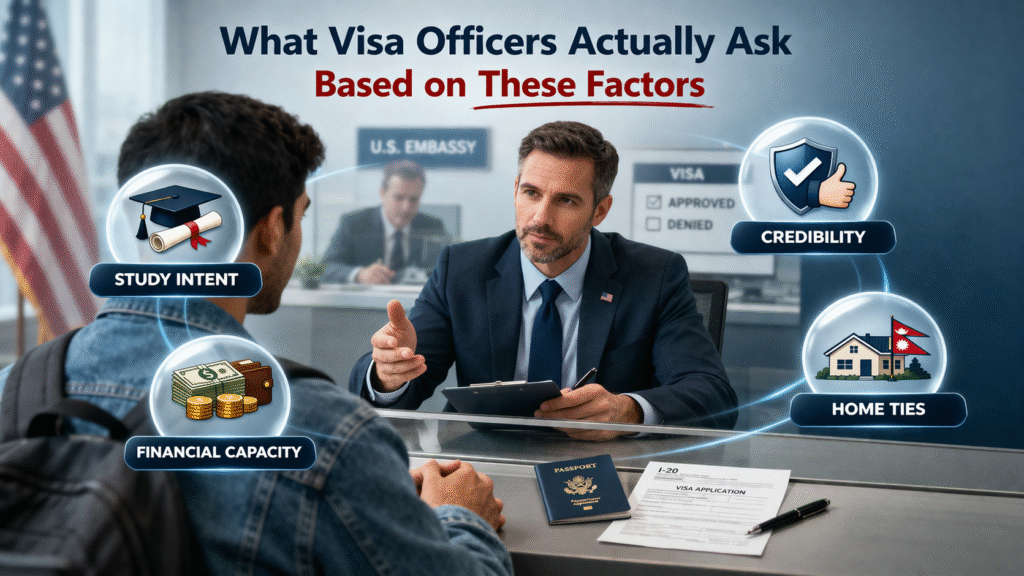
What Visa Officers Actually Ask Based on These Factors
| Factors | What They Evaluate |
| Study Intent | Is your academic plan logical and relevant? |
| Financial Capacity | Can you genuinely afford your education? |
| Credibility | Are your answers natural and believable? |
| Home Ties | Do you have strong reasons to return? |
The decision is not based on one factor it’s based on your overall story.
How to Avoid USA Student Visa Rejection (Before Interview)
Preparation is the most important part of your visa success.
Smart Preparation Steps
- Choose a course aligned with your previous education
- Build a clear and logical career plan
- Prepare strong and verifiable financial proof
- Ensure all documents are consistent
- Understand your application deeply (not just memorized)
Students who prepare strategically often with guidance from platforms like Crown Bridge International Education Consultancy tend to present stronger and more confident cases.
USA Visa Interview Tips (During Interview)

This is where most decisions are made.
Practical Interview Tips
- Keep answers short, clear, and direct
- Speak naturally instead of memorizing scripts
- Maintain confidence and eye contact
- Answer honestly without over-explaining
- Stay calm even if questions feel challenging
Behavior vs Outcome
| Behavior | Likely Result |
| Clear and confident answers | Higher approval chances |
| Nervous or unclear responses | Creates doubt |
| Over-rehearsed answers | Feels unnatural |
| Honest communication | Builds trust |
Final Insight
A USA student visa rejection under 214(b) is common and does not mean your journey is over. It simply indicates that your case needs better clarity, stronger explanation, and more consistent presentation.
With proper preparation, logical study planning, and genuine communication, many Nepali students successfully improve their approach and secure their F1 visa in future attempts.